

ChemRegs Newsletter – October 2023
Lithium batteries
Lithium batteries continue to present a risk to air travel. Data from the US Federal Aviation Administration (FAA) suggest that, on average, there is more than one incident per week related to lithium batteries in the United States alone. Although most incidents are minor they can still cause flight diversions with all the costs and consequences that arise.
Lithium batteries are classified as dangerous goods by the UN Subcommittee of Experts on the Transport of Dangerous Goods and are subject to all relevant aviation regulations. In the International Air Transport Association (IATA) Dangerous Goods Regulations (DGR), they are separated into lithium metal batteries and lithium-ion batteries. Lithium metal batteries have lithium metal as an anode and this usually powers such items as watches, calculators, and car key fobs. Lithium-ion batteries are rechargeable batteries where the lithium is only present in an ionic form in the electrolyte. These are more common in smartphones and laptops.
Lithium batteries release energy through an electrochemical reaction as the lithium ions move from one electrode
to another through a liquid medium known as an electrolyte. The positively charged electrode contains oxygen and the electrolyte is flammable. Therefore, if a short circuit occurs or if a battery is exposed to excessive heat or pressure, all the ingredients for a self-sustaining fire are available. Reactions can occur that give off heat, which is known as a thermal runaway. This vaporizes the electrolyte, puts pressure on the cell casing, and, when the casing breaks, flammable and toxic gases are released. If other flammable materials are nearby, including other battery cells, then a catastrophic fire could result.
Regulations state that the maximum state of charge for the shipment of a lithium battery is 30%, above which the risk of fire greatly increases. However, even batteries with no charge are not “dead” and are still a risk.
Creating awareness is an important first step in lithium battery safety. To this end, IATA has produced a White Paper called “Make Lithium Batteries Safe to Ship” that presents all the relevant information in an easy-to-read format with relevant links to industry standards and recommended practices.
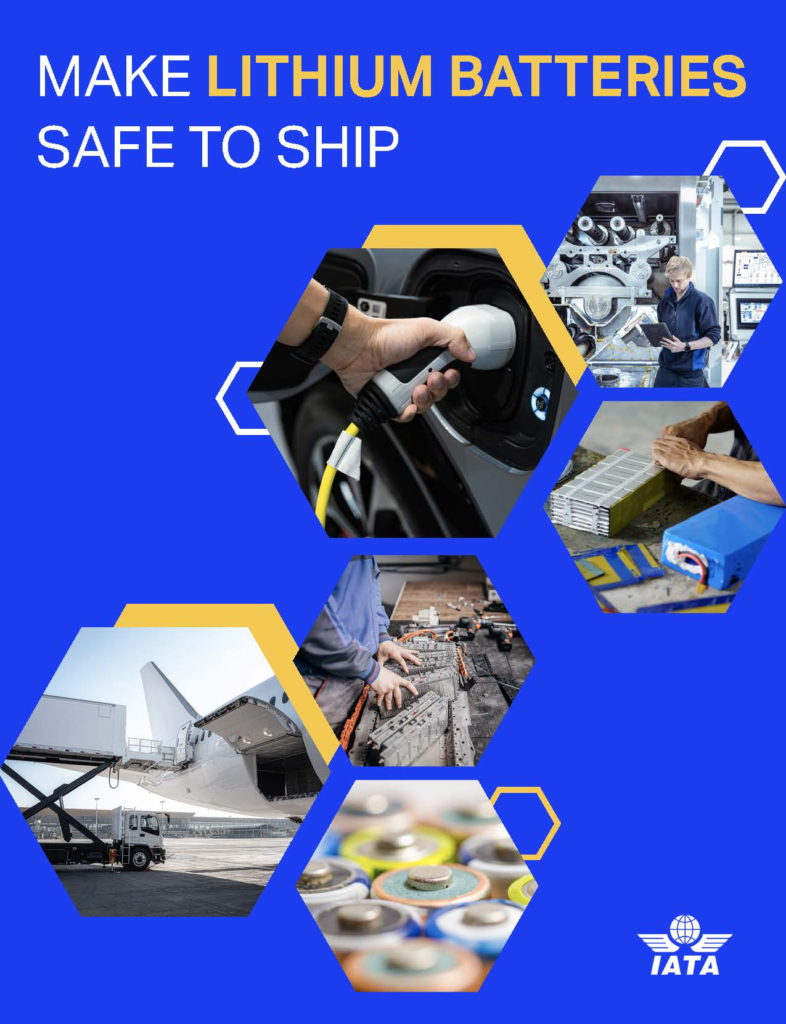
To get a copy of the white paper, go to https://services.iata.org/lithium-batteries-white-paper-download.
GB MCL List Updated
The GB mandatory classification and labelling system for the GP CLP Regulation is hosted, managed and operated by HSE (as the GB CLP Agency) and gives information on the classification and hazard labelling of substances, which are legally binding in GB.
The GB mandatory classification and labelling list (GB MCL List) was initially a copy of the EU harmonised classification and labelling (CLH) listed in Annex VI to the CLP Regulation, as it stood when the UK left the EU in 2021.
It has now been updated and reissued as version 2.0, dated 20 October 2023.
If you are classifying a substance that appears in the GB MCL List, then you must use the mandatory classification and labelling that appears in the GB MCL List. Similarly, if you are classifying a mixture that contains a substance on the GB MCL List, you must use the mandatory classification in your calculations. The exception is where you have robust scientific data on the mixture itself which you can use to classify the mixture, rather than using information on the component substances.
The second edition of the GB MCL List has been updated to include the new/revised GB mandatory classifications and labelling for the 98 substances included in the first GB CLP Agency recommendation to ministers and agreed by ministers (September 2023).
These include new mandatory classifications for citric acid CAS 77-92-9 (now becomes Eye Irrit. 2, H319 and STOT SE 3, H335) and benzyl salicylate CAS 118-58-1 (now becomes Skin Sens. 1B, H317).
Revised classifications included boric acid and the borates, whereby the existing mandatory classification as Repr. 1B, H360FD remains unchanged, but the Specific Concentration Limit (SCL) of 5.5% for this classification is removed. The absence of a SCL means the general concentration limit for Repr. 1B applies i.e 0.3%.
Each of the 98 substances were assessed by the HSE’s regulatory scientists, who created a GB MCL Technical Report for each substance. The Technical Report is essentially a scientific assessment of a substance’s intrinsic hazardous properties in the context of the GB CLP classification criteria. The GB MCL Technical Reports are published on the HSE GB CLP publication table (.xlsx).
The updated GB MCL List also corrected a number of reported errors in the previous MCL list (editorial issues, typos and transcription errors). In addition, the following changes were made:
Entry amended: Index no. 006-014-00-3, nabam (ISO), EC 205-547-0, CAS 142-59-6 (missing H code H400 added)
Entry amended: Index no. 602-091-00-8, 1,3-dichloro-4-fluorobenzene, EC 406-160-1, CAS 1435-48-9 (“Aquatic Chronic 2” added)
Entry amended: Index no. 048-014-00-6, cadmium nitrate; cadmium dinitrate, EC 233-710-6, CAS 10325-94-7 (STOT RE 1; H372 (kidney, bone), Aquatic Acute 1; H400 and Aquatic Chronic 1; H410 added)
The latest GB MCL List can be downloaded from here.
Although the new and revised classifications enter into force from 20 October 2023, the actual compliance date is by 20 April 2025. This gives stakeholders time to check and reclassify their products and ensure that any CLP labels are upated to align with the new or revised GB MCLs.
For more information on anything in this Newsletter, please contact us at info@chemregs.co.uk