
ChemRegs Newsletter – December 2023
Merchant Shipping (Carriage of Dangerous Goods and Harmful Substances) Regulations 2024
The UK Maritime and Coastguard Agency (MCA) has opened a consultation to seek views on a new Statutory Instrument (SI) titled the Merchant Shipping (Carriage of Dangerous Goods and Harmful Substances) Regulations 2024 (“the 2024 Regulations”) and accompanying Marine Guidance Notes (MGNs). The 2024 Regulations aim to update and consolidate the UK regulations related to the transport of dangerous goods by sea.
The MCA is an executive agency of the Department for Transport and is primarily responsible for the maritime safety policy areas falling under the Merchant Shipping Act 1995. The MCA is also responsible for the domestic regulations which implement the International Convention for the Safety of Life at Sea, 1974 (“SOLAS”) and the International Convention for the Prevention of Pollution from Ships, 1973 (“MARPOL”), including those which relate to the carriage of dangerous goods and harmful substances by sea.
A wide variety of dangerous goods are carried by sea, both in bulk and in packaged form. For example, the International Maritime Dangerous Goods (IMDG) Code lists over 3000 different dangerous goods substances plus many others which are covered by generic entries in the Code (for example, UN 3077 Environmentally Hazardous Substance, Solid, Not Otherwise Specified). It is estimated that approximately 5-7% of freight carried by sea is classified as dangerous goods and regulating the carriage of dangerous goods by sea has always been a key part of maritime safety regulations.
The 2024 Regulations will revoke the current Merchant Shipping (Dangerous Goods and Marine Pollutants) Regulations 1997 (“the 1997 Regulations”) along with a number of other dangerous goods related regulations and will consolidate the requirements into one new SI, which has been developed to provide a more complete, consolidated and up to date legal framework for the carriage of dangerous goods and harmful substances by sea.
The IMDG Code is currently implemented in the UK by the 1997 Regulations and the proposed 2024 Regulations will continue to implement the latest version of it. The IMDG Code is updated by the IMO on a two-year cycle to ensure that it remains up to date, accurate and reflects current dangerous goods transport needs. This two-year amendment cycle is currently accommodated in UK legislation by the issuing of a Merchant Shipping Notice (MSN) to give effect to the latest edition of the Code. The 2024 Regulations will include ambulatory reference provisions so that these amendments will take effect in the UK without having to issue an MSN.
The proposed 2024 Regulations largely restate and update the existing provisions rather than introduce any new or novel provisions, meaning the overall cost impacts for stakeholders are expected to be low.
The consultation includes two draft Marine Guidance Notes (MGNs), one on the 2024 Regulations themselves and a second on the carriage of explosives.
The consultation period ends on 19 January 2024 and full details can be found on the UK government website at https://www.gov.uk/government/consultations/consultation-on-the-merchant-shipping-carriage-of-dangerous-goods-and-harmful-substances-regulations-2024.
EU CLP Regulation revision in final stages
The European Parliament and the Council have reached a provisional agreement on the revision of the regulation on the classification, labelling and packaging of chemicals (EU CLP). The new measures aim to improve the functioning of the EU market regarding products containing hazardous chemicals, as well as better protecting consumers, workers, and the environment.
The revision of the EU CLP Regulation includes:
- Updated rules for classifying complex substances (substances containing more than one constituent, known as ‘MOCS’). The EU Parliament and the Council have agreed on a specific derogation for plant extracts, including essential oils, with a 5-year review of scientific evidence by the Commission.
- Better protection of consumers when buying hazardous chemicals online. Websites will have to display the hazardous properties of the products.
- Clearer labelling of hazardous chemicals, including for online sales. For instance, the revision introduces advertising requirements and a minimal font size for hazardous chemicals.
- The possibility for businesses to use fold-out labels and digital labelling, while important safety information and the hazard pictograms will also remain on-pack.
- In addition to EU Member States and industry, the Commission will also have the right to develop classification proposals on potentially hazardous substances. This will speed up the pace at which hazardous substances are identified.
- First ever rules for refillable chemicals, to support the safe sale of household chemicals in bulk. This will also reduce packaging and consequently packaging waste.
- Poison centres will receive better and faster information for medical emergencies.
The European Parliament and the Council will now formally adopt the new Regulation. Once formally adopted, it will enter into force 20 days after its publication in the Official Journal of the EU.
It is not known if the GB CLP Regulation will follow suit and adopt similar revisions.
The process of updating and amending the technical sections of the GB CLP Regulation is done using secondary legislation (regulations), which can include introducing new classification hazard classes, adopting new test methodologies or strengthening the labelling packaging requirements for certain hazardous mixtures, such as those for laundry detergent capsules or pods.
All secondary legislation will be subject to the agreement of Parliament before the regulations can enter into force. The process for secondary legislation can be found on Parliament’s website. Amending regulations are expected to follow the negative procedure.
Public consultations are advertised using the HSE’s GB CLP e-Bulletin (and you are encouraged to sign-up if you have not already done so).
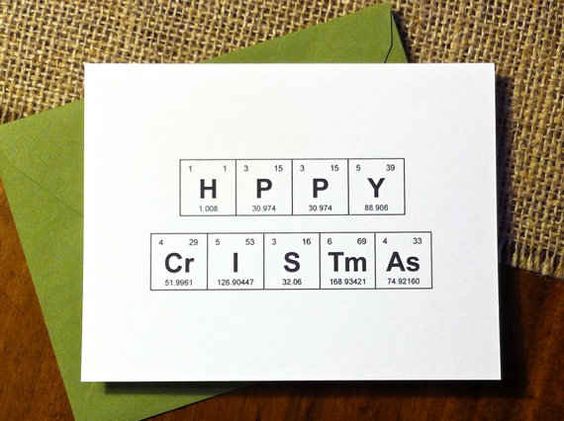
MERRY CHRISTMAS AND A VERY HAPPY NEW YEAR!!
We would like to wish you all a very Happy Christmas and a peaceful New Year.
For more information on anything in this Newsletter, please contact us at info@chemregs.co.uk