

ChemRegs Newsletter – April 2026
RIDDOR: Consultation launched
HSE has launched a consultation on The Reporting of Injuries, Diseases and Dangerous Occurrences Regulations 2013 (RIDDOR).
The consultation seeks stakeholder views on a range of legislative and non-legislative proposals to help reduce work-related ill health, one of HSE’s key strategic objectives. It is also looking for options to reduce the burden on businesses when making these reports to the regulator, through simplifying the reporting process.
Legislative proposals
- Clarify definitions in Regulation 2 of RIDDOR and associated guidance, where certain terms such as “work-related”, “injury” and “routine work” have been identified as unclear or ambiguous.
- Revise the list of occupational diseases in Regulation 8 of RIDDOR by reintroducing some diseases that were previously on the list and adding new diseases to ensure serious instances of ill-health are captured.
- Broaden the scope of accepted “diagnosis” in Regulation 2 of RIDDOR to allow the diagnosis of an occupational disease by other types of registered health practitioners, not just doctors who are registered and hold a license to practice with the General Medical Council (GMC).
- Revise the list of dangerous occurrences in Schedule 2 of RIDDOR by adding new categories and amending existing ones to reflect modern risks.
Non-legislative proposals
- Improve the RIDDOR reporting process by simplifying the online form to reduce both under-reporting and over-reporting and improve overall usability.
This consultation is relevant to all sectors and industries – in particular duty holders, self-employed people and those in control of work premises. It is also relevant to associated professions, including health care practitioners. Certain proposals, however, may apply more specifically to particular roles than to others.
The full consultation document, including detailed proposals, background information and how to respond, is available on HSE’s website at Consultation on proposals for The Reporting of Injuries, Diseases and Dangerous Occurrences Regulations 2013.
The consultation is open until 30 June 2026.
When the consultation has closed, HSE will consider the views expressed to decide how best to take the proposals forward based on an interpretation and analysis of the responses. A summary of HSE’s response to the views expressed by respondents will be published on the consultation webpage after the close of the consultation period.
Survey on GB CLP Regulation
HSE is considering amendments to the GB Classification, Labelling and Packaging (CLP) Regulation to mirror those recently introduced in the EU CLP Regulation in order to establish a consistent CLP regime between GB and Northern Ireland (NI), as NI uses the EU CLP Regulation.
They are collecting operational data from supply chain actors with responsibilities under GB CLP and are looking for feedback on the potential impact, if any, that the incorporation of EU measures into GB CLP may have on your business and the sector.
The voluntary survey is aimed at manufacturers, importers, downstream users and distributors in GB and NI.
HSE are particularly interested in your feedback on:
- EU CLP’s six new hazard classes (ED HH 1, EUH380; ED HH 2, EUH381; ED ENV 1, EUH430; ED ENV 2, EUH431; PBT, EUH440; vPvB, EUH441; PMT, EUH450; vPvM, EUH451)
- Refill stations
- Digital labelling – non-obligatory information
- Digital labelling – telephone number replaced with digital contact
The information provided will be used by HSE to understand the impact of potential changes to GB CLP and develop impact assessments and future consultation exercises.
HSE is assuring stakeholders that none of the information they provide will be used for regulatory inspection purposes.
The survey will close at on 31 May 2026 and is available at HSE Survey: Potential impacts of changes to the CLP Regulation.
ADR 2027
Draft amendments to ADR 2025 for entry into force on 1 January 2027 have been adopted by the Working Party on Transport of Dangerous Goods in the UN.
These amendments are given in document ECE/TRANS/WP.15/274 and include, inter alia:
- Minor changes to the table for Transport Category exemptions in 1.1.3.6.3.
- Addition of a new subsection for disposal of refillable US DOT pressure receptacles “1.1.4.7.3 Disposal of refillable pressure receptacles”.
- Changes to definitions in Chapter 1.2.
- Minor changes in Chapter 1.3 on training.
- New transitional measures in Chapter 1.6.
- New subsections and a flow chart in 2.1.4.3 on samples of energetic materials for testing purposes.
- Various amendments to Chapter 2.2 on classification.
- Various amendments to Chapter 3.2 the DG List.
- Various amendments to special provisions in Chapter 3.3.
- Various amendments to Chapter 4.1, 4.2, and 4.3 on use of packagings, IBCs, portable tanks, and fixed tanks/tank-vehicles.
- Various amendments to Chapter 5.3 Placarding and Marking, including an amendment to 5.3.5 for “extra-large tank-containers intended for the carriage of liquefied, refrigerated liquefied or dissolved gases to be marked with an unbroken, orange, non-reflectorized band, about 30 cm wide, in the colour tone “RAL 2003 pastel orange” encircling the tank at mid-height.”
- Various amendments to Chapter 5.4 Documentation, including revisions to the drivers Instructions in Writing, which have not been changed since 2017. The changes are mainly replacing “Risk of” by “May cause” and “risks” by “hazards.
- Various amendments to Chapters 5.5, 6.1 – 6.11, 7.1, 7.3, 7.5, and 8.1 (including replacing documents to be carried “on the driver’s cab” by “in the driver’s cab”).
- Amendments to Chapter 8.2 on driver training to allow initial training and refresher training to be delivered as in-person training, remote training, or a combination of these.
- Various amendments to Chapters 9.2, 9.7, and 9.8.
For the full text of the amendments, download the document ECE/TRANS/WP.15/274.
IATA Battery Guidance Document
The International Air Transport Association (IATA) has published new versions of its free Battery Guidance Documents, which have been revised for the 2026 Regulations.
The guidance documents are based on the provisions set out in the 2025-2026 Edition of the ICAO Technical Instructions for the Safe Transport of Dangerous Goods by Air (Technical Instructions) and the 67th Edition (2026) of the IATA Dangerous Goods Regulations (DGR). They aim to assist shippers in understanding the complete requirements related to the transport of batteries including lithium and sodium ion batteries, and nickel-metal hydride batteries.
The 2026 Battery Guidance Document for the Transport of Lithium Metal, Lithium Ion and Sodium Ion Batteries can be downloaded from: https://www.iata.org/contentassets/05e6d8742b0047259bf3a700bc9d42b9/lithium-battery-guidance-document.pdf. There has been significant restructuring of the material in this document and twhen compared to the 2025 edition of this document, certain text changes can be identified by the use of notations:
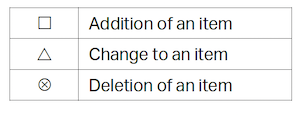
The revised 2026 Battery Guidance Document for the Transport of UN 3496, Batteries, nickel-metal hydride can be downloaded from: https://www.iata.org/contentassets/05e6d8742b0047259bf3a700bc9d42b9/guidance-document-nickel-metal-hydride-batteries-en.pdf. This guidance document is provided by IATA to address the difficulties experienced by parties shipping and/or accepting UN 3496, Batteries, nickel metal hydride and equipment containing nickel-metal hydride batteries by air transport.
The provisions of the DGR with respect to lithium and sodium ion batteries may also be found in the IATA Battery Shipping Regulations (BSR) 13th Edition. In addition to the content from the DGR, the BSR also has additional classification flowcharts and detailed packing and documentation examples for these batteries. Unfortunately the BSR is not free and can be bought as a digital or hard copy from IATA publications.
On 27 March 2026, the International Civil Aviation Organization (ICAO) introduced an addendum to the Technical Instructions regarding power banks. IATA has developed a guidance document to assist operators in assessing, managing, and implementing the changes imposed by the addendum. View the guidance for operators (pdf).
The addendum has an impact for operators whose crew use power banks to recharge or power devices in the performance of their duties and for passengers carrying power banks or when using them during the flight.
The changes:
- Separate out power banks from spare batteries
- Limit passengers (and crew) to two power banks for personal use
- Prohibit passengers recharging the power bank in flight
A draft version of the addendum to the Technical Instructions is at Appendix C of the guidance document. The authoritative version will published and made available by ICAO. This guidance document should be used in conjunction with the 67th edition of the IATA Dangerous Goods Regulations (DGR) and will not be effective beyond 31 December 2026. The 68th edition of the IATA DGR will come into force on 1 January 2027 and will contain the changes introduced by the addendum to the Technical Instructions.
A parallel guidance document, Passengers travelling with lithium batteries revised for the 2026 Regulations is more relevant for passengers and crew when carrying devices that contain lithium batteries, including power banks, small vehicles, e-cigarettes, smart luggage, baggage tags and tracking devices. There has been significant amendment of the material in this document in order to accommodate the upcoming changes to the provisions around power banks. When compared to the 2025 edition of this document, certain text changes can be identified by notations as shown above.
For more information on anything in this Newsletter, please contact us at info@chemregs.co.uk